

IDD Therapy vs Shockwave Therapy: Which Treatment Is Right for Your Back Pain?
- Ivan Rowland
- Jun 17
- 10 min read
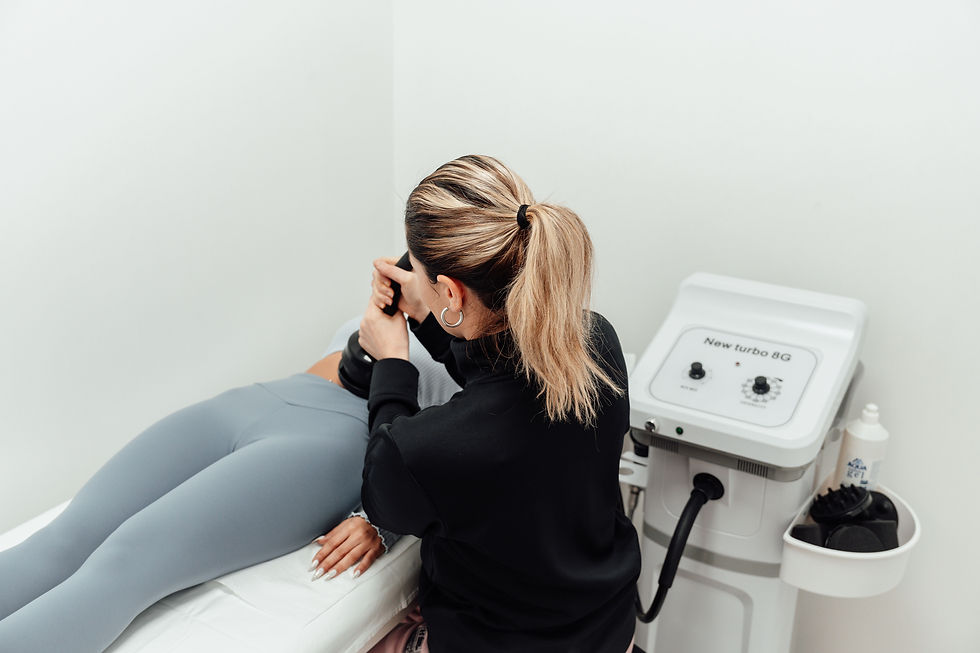
Two patients walk into a clinic with chronic back pain. Both have tried painkillers, rest, and standard physiotherapy with little lasting relief. One has a herniated disc compressing a nerve root.
The other has a stubborn muscular condition around the lumbar spine. They may need very different treatments and choosing the right one from the start is what determines whether they recover in weeks or continue suffering for months.
This guide explains exactly how IDD therapy and shockwave therapy differ, what each is designed to treat, and how to know which approach is the right fit for your back pain.
What Is IDD Therapy? Understanding Spinal Decompression for Disc Pain
IDD Therapy short for Intervertebral Differential Dynamics Therapy is a form of targeted, computerised spinal decompression.
It works by applying a gentle, oscillating distraction force to specific vertebral segments, reducing pressure within the intervertebral disc and the surrounding nerve structures.
The treatment is delivered using the Accu-SPINA device, which is FDA-approved as a Class II medical device and was developed by a team of neurosurgeons, orthopaedic surgeons, and physiotherapists.
Unlike older traction methods that applied a generalised pull across the spine, IDD Therapy isolates the precise disc level causing the problem and delivers a controlled, sinusoidal waveform that allows the disc to gently decompress without triggering protective muscle spasm.
When a spinal disc is compressed, bulging, or herniated, it loses its normal fluid content and the space between the vertebrae narrows.
This reduction in disc height places pressure on nearby nerve roots, producing pain, numbness, and referred symptoms down the leg commonly experienced as sciatica.
IDD Therapy aims to reverse this process by creating a sustained negative pressure within the disc, which encourages retraction of disc material and draws in the fluid, oxygen, and nutrients needed for natural repair.
A retrospective cohort study published in 2024 and 2025 at a specialist clinic using the Accu-SPINA device found that patients with MRI-confirmed disc bulges and herniations experienced statistically significant reductions in both pain scores and disability index scores after completing a full course of IDD Therapy,
with no adverse effects reported across the cohort. Research cited on Physiopedia also notes that IDD therapy produces consistent, reproducible spinal decompression with evidence of disc rehydration on MRI following treatment.
At Charm Chiropractic in Broadstairs, IDD Therapy is used in combination with manual therapy and rehabilitation, creating a structured treatment programme rather than relying on the device alone.
What Is Shockwave Therapy? Understanding ESWT for Musculoskeletal Pain
Shockwave therapy formally known as Extracorporeal Shockwave Therapy (ESWT) is a non-invasive treatment that delivers high-energy acoustic pulses into damaged soft tissue.
These sound waves stimulate the body's healing response at a cellular level, increasing blood flow, breaking down calcified deposits, and triggering the production of collagen and growth factors that repair injured tissue.
The treatment is typically delivered using a handheld applicator placed directly over the affected area.
There are two primary forms radial shockwave, which spreads energy outward from the surface, and focused shockwave, which concentrates energy at a precise depth within the tissue.
Both types are used depending on the nature and location of the condition being treated.
Shockwave therapy has a strong evidence base across a range of musculoskeletal conditions.
A systematic review published in Frontiers in Medicine in 2024 examined focused ESWT for low back pain and found meaningful pain reduction across the studies reviewed. Separately, a 2024 randomised controlled trial found shockwave therapy significantly reduced pain and improved function in patients with knee osteoarthritis compared to standard conservative care.
Additional peer-reviewed research from 2024 and 2025 supports shockwave for tendinopathy, plantar fasciitis, frozen shoulder, and gluteal pain.
At Charm Chiropractic, shockwave therapy is used for chronic musculoskeletal pain, soft tissue conditions, and cases where tissue healing has stalled. It is frequently combined with chiropractic care and rehabilitation for comprehensive recovery.
IDD Therapy vs Shockwave Therapy: A Direct Comparison
Understanding the clinical differences between these two treatments helps clarify which is more appropriate for a given condition.
Feature | IDD Therapy | Shockwave Therapy |
Primary mechanism | Spinal decompression and disc rehydration | Acoustic stimulation of tissue healing |
Target structure | Intervertebral discs and nerve roots | Tendons, ligaments, muscles, fascia |
Best suited for | Disc herniation, bulging disc, disc degeneration, sciatica | Tendinopathy, plantar fasciitis, soft tissue pain, myofascial trigger points |
Delivery method | Computerised Accu-SPINA device | Handheld radial or focused applicator |
Session length | Approximately 25 to 30 minutes per session | 10 to 20 minutes per session |
Typical course | 20 to 30 sessions over 6 to 10 weeks | 3 to 6 sessions over 3 to 6 weeks |
Evidence base | Growing, particularly for disc-related conditions | Extensive, across multiple musculoskeletal conditions |
Suitable for nerve pain | Yes, particularly disc-related nerve compression | Limited; primarily targets soft tissue rather than nerve root compression |
Post-treatment soreness | Minimal; most patients report relief during treatment | Possible mild soreness for 24 to 48 hours after sessions |
Suitable for | Patients with disc pathology, often after failed conservative treatment | Patients with chronic soft tissue conditions, calcification, or failed tendon healing |
The central distinction is one of target structure. IDD Therapy works on the disc itself and the mechanical decompression of nerve roots. Shockwave Therapy works on the soft tissue surrounding the spine the muscles, tendons, ligaments, and fascial layers that support spinal function.
Which Conditions Respond Best to IDD Therapy?
IDD Therapy is specifically designed for spinal disc conditions and is most effective when the root cause of a patient's pain can be traced to disc pathology confirmed or suspected on imaging. The conditions it is most commonly used for include:
Herniated or Prolapsed Discs
When disc material pushes beyond its normal boundary and contacts a nerve root, the result is often severe, radiating pain. IDD Therapy's decompressive effect creates negative intradiscal pressure, which can encourage the disc material to retract away from the nerve and reduce the chemical irritation responsible for pain and inflammation.
Bulging Discs
A bulging disc has not fully ruptured but extends beyond the disc boundary, often narrowing the space available for nearby nerves. IDD Therapy aims to restore disc height and reduce the bulge over a structured treatment course.
Degenerative Disc Disease
As discs lose fluid content with age or injury, they become less able to absorb spinal load. IDD Therapy targets degenerated segments to encourage fluid imbibition and nutrient exchange within the disc, slowing deterioration and reducing pain.
Sciatica Caused by Disc Compression
Many cases of sciatica are directly caused by disc herniation at the L4/L5 or L5/S1 level compressing the sciatic nerve root. Where sciatica has a confirmed disc origin, IDD Therapy addresses the underlying mechanical cause rather than managing symptoms alone.
Failed Conservative Treatment
IDD Therapy is often considered when standard physiotherapy, chiropractic adjustments, and pain medication have not produced lasting results. It provides a structured, progressive treatment protocol specifically designed for disc conditions that other approaches may not adequately address.
Patients at Charm Chiropractic who are assessed as suitable for IDD Therapy typically have a history of disc-related symptoms for at least three months and have not found resolution through standard treatment.
Which Conditions Respond Best to Shockwave Therapy?
Shockwave Therapy is most effective for chronic soft tissue conditions where the body's natural healing mechanisms have become stalled or insufficient. The conditions it targets most reliably include:
Tendinopathy
Chronic tendon problems whether in the Achilles tendon, rotator cuff, gluteal tendons, or patella respond well to shockwave therapy. The acoustic energy stimulates collagen production and disrupts the dysfunctional tissue patterns that prevent healing.
Plantar Fasciitis
One of the most evidence-rich applications for shockwave therapy. Chronic plantar fasciitis that has not responded to stretching, orthotics, or injections is a primary indication for ESWT.
Calcific Deposits
Calcification within tendons or bursae, particularly in the shoulder, can be disrupted mechanically by focused shockwave energy, accelerating reabsorption and reducing pain.
Myofascial Pain and Trigger Points
Research published in 2025 on shockwave therapy for myofascial pain syndrome supports its use in breaking down active trigger points within muscular tissue areas of localised contraction that cause referred pain patterns throughout the back and surrounding regions.
Chronic Lower Back Pain with Soft Tissue Origin
Where chronic back pain is driven by muscular, ligamentous, or fascial dysfunction rather than disc pathology, shockwave therapy can stimulate healing and reduce chronic pain cycles.
A 2024 systematic review in Frontiers in Medicine found focused ESWT effective for low back pain in the reviewed randomised controlled trials.
At Charm Chiropractic, shockwave therapy is offered as a standalone treatment or as part of a broader injury rehabilitation programme for patients with chronic musculoskeletal pain.
Can IDD Therapy and Shockwave Therapy Be Used Together?
Yes and for some patients, a combination approach is the most clinically effective strategy.
A patient with both a disc herniation causing sciatica and significant paraspinal muscle dysfunction may benefit from IDD Therapy, addressing the disc component while shockwave therapy targets the surrounding soft tissue that has become chronically contracted or irritated as a consequence of long-standing pain.
The two treatments are compatible and can be sequenced within the same treatment programme.
This is a significant advantage of attending a clinic that offers both modalities under one roof. Rather than receiving only the treatment a single-service clinic specialises in, patients at Charm Chiropractic can receive a genuinely individualised assessment that considers which treatment or combination of treatments best addresses their specific presentation.
At Charm Chiropractic's clinic at the Kent Innovation Centre in Broadstairs, patients are assessed for both mechanical disc pathology and soft tissue dysfunction before a treatment plan is constructed. This means the right tool is selected for the right problem not the only tool available.
How a Chiropractor Assesses Which Treatment You Need
Before either treatment is recommended, a thorough clinical assessment is required. This assessment at Charm Chiropractic typically includes:
Clinical History
Understanding the duration, location, and character of your pain whether it is sharp, radiating, positional, or constant provides significant diagnostic information. The presence of leg pain, foot numbness, or weakness is particularly relevant in identifying a disc-related nerve component.
Orthopaedic and Neurological Testing
Specific movement tests, straight leg raise assessment, and reflex testing help identify the spinal segments involved and whether nerve root compression is present.
Review of Imaging
If an MRI or X-ray has been performed, reviewing the findings allows a clear picture of disc condition, disc height, nerve canal space, and any identifiable structural abnormality.
Response to Previous Treatment
Knowing which treatments have been tried and how the body responded to them helps narrow the clinical picture. A patient who experienced temporary relief from manipulation but recurring pain may have a disc component that needs direct decompression rather than symptomatic adjustment.
This assessment process ensures that patients are not simply matched to a standard protocol but are placed on the most appropriate treatment pathway for their individual condition. You can book your initial assessment at Charm Chiropractic by visiting the contact page or calling the clinic directly.
IDD Therapy and Shockwave Therapy for Patients in Kent and Thanet
Charm Chiropractic is one of the only clinics in the Broadstairs and wider Thanet area to offer both IDD spinal decompression and shockwave therapy alongside full chiropractic care and acupuncture.
Patients travelling from Margate, Ramsgate, Canterbury, and across Kent can access both treatments at a single clinic without being referred between multiple providers.
For patients in Kent who have been told they may need surgery for a disc condition, IDD Therapy offers a structured, non-surgical alternative that should be considered before committing to an invasive procedure.
For patients with chronic soft tissue pain that has not responded to standard treatment, shockwave therapy provides a clinically evidenced option to stimulate genuine healing rather than continuing to manage symptoms.
The clinic is located at the Kent Innovation Centre, Thanet Reach Business Park, Millennium Way, Westwood, Broadstairs CT10 2QQ, with flexible appointment times available across the week.
Frequently Asked Questions About IDD Therapy vs Shockwave Therapy
Is IDD therapy the same as traction?
No. While both involve spinal distraction, IDD Therapy uses a computerised sinusoidal waveform to decompress specific disc segments in a controlled, oscillating pattern. Traditional traction applies a generalised pull without the ability to isolate individual spinal levels or prevent protective muscle spasm, making it significantly less targeted and less effective for disc-specific conditions.
How do I know if I need IDD therapy or shockwave therapy for my back pain?
The most reliable way to determine which treatment is appropriate is through a clinical assessment with a qualified practitioner. In general terms: if your back pain is associated with a herniated or bulging disc, sciatica, or disc degeneration identified on imaging, IDD Therapy is likely the more appropriate starting point. If your pain is related to a chronic soft tissue condition, tendinopathy, or muscular dysfunction, shockwave therapy may be more suitable. Many patients benefit from both.
How many sessions of IDD therapy are needed?
A full course of IDD Therapy typically involves 20 to 30 sessions, delivered three to five times per week over a six to ten week period. The full protocol is designed to allow progressive disc rehydration and healing, and partial courses are generally less effective than completing the recommended number of sessions.
Is shockwave therapy painful?
Shockwave therapy can cause mild discomfort during treatment, particularly over areas of active inflammation or trigger points. Most patients describe the sensation as a tapping or pressure that is tolerable and brief. Some post-treatment soreness lasting 24 to 48 hours is normal and indicates the healing response has been activated. Sessions typically last between 10 and 20 minutes.
Can I have shockwave therapy and IDD therapy at the same time?
Yes. Where a clinical assessment indicates that both disc pathology and soft tissue dysfunction are contributing to a patient's condition, both treatments can be incorporated into a structured programme. This combined approach can address the mechanical disc component and the surrounding soft tissue simultaneously, potentially producing faster and more durable results.
Is shockwave therapy safe for the spine?
Shockwave therapy applied to the lumbar or thoracic region by a qualified practitioner is considered safe. It is not typically applied directly over inflamed nerve tissue but is used to address the muscular and connective tissue components of back pain. Contraindications include pregnancy, active infection at the treatment site, and certain blood clotting conditions. Your practitioner will screen for these at assessment.
Does IDD therapy work for sciatica?
IDD Therapy is specifically designed to address disc-related sciatica, which accounts for the majority of sciatica cases. By reducing intradiscal pressure and encouraging retraction of herniated disc material, the treatment directly targets the mechanical cause of sciatic nerve compression. Patients with sciatica that has persisted despite physiotherapy or chiropractic care are often good candidates for a structured IDD Therapy programme.
Choosing the Right Treatment at Charm Chiropractic
Both IDD Therapy and shockwave therapy are effective, evidence-supported treatments for back pain but they are not interchangeable. IDD Therapy targets the disc and nerve root directly, making it the treatment of choice for disc herniation, bulging disc, and disc-related sciatica.
Shockwave Therapy targets soft tissue, making it the stronger option for tendinopathy, calcification, myofascial pain, and chronic musculoskeletal conditions where healing has stalled.
The advantage of attending Charm Chiropractic in Broadstairs is that you do not need to choose between them before walking through the door.
A thorough clinical assessment by an experienced chiropractor identifies the root cause of your condition and builds a treatment plan that uses the right approach or the right combination of approaches for your specific situation.
If you are living with back pain in Broadstairs, Thanet, Margate, Ramsgate, or anywhere across Kent and want to understand which treatment is right for you, book your consultation at Charm Chiropractic and let the diagnosis lead the decision.


Comments